
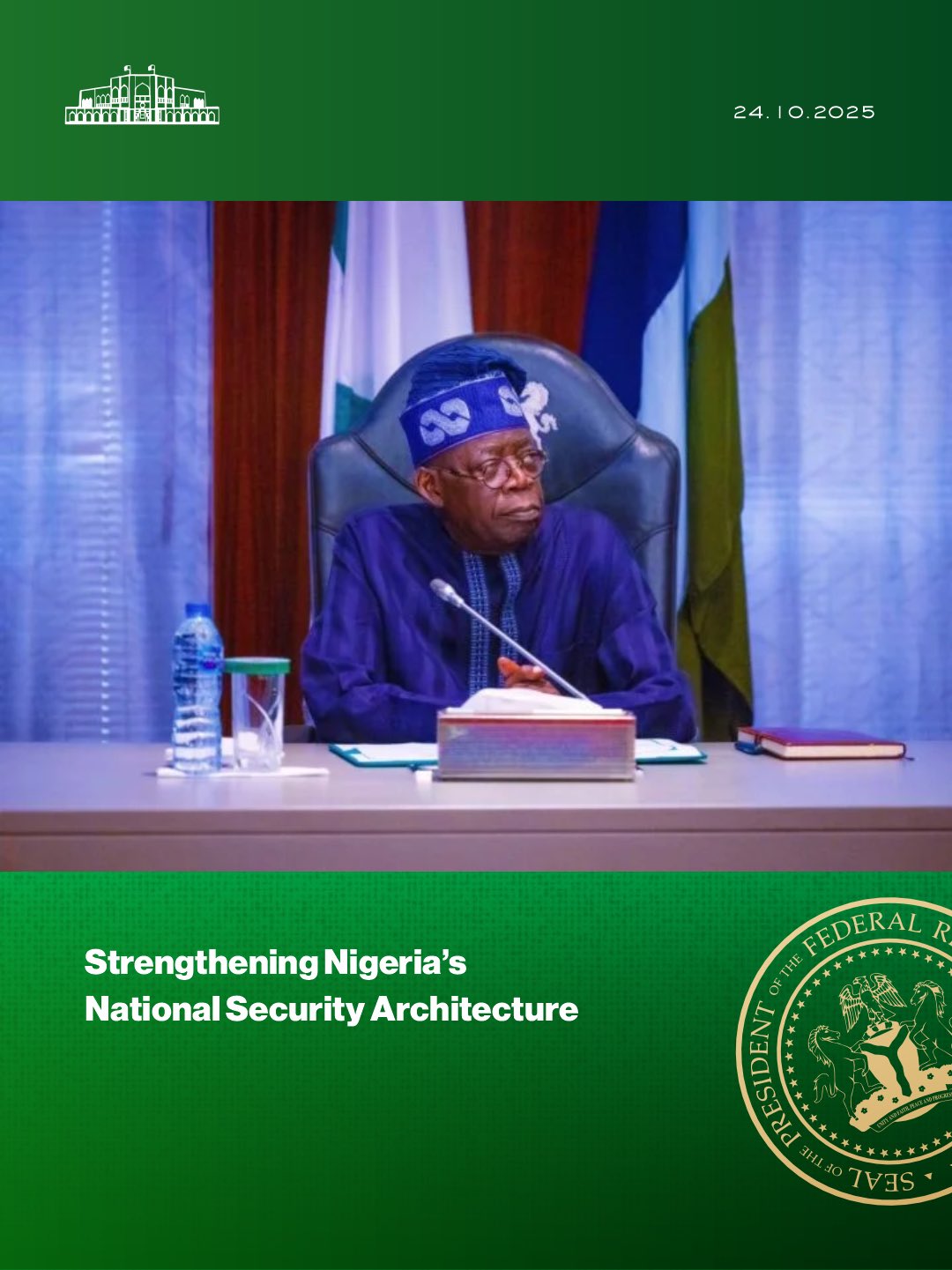
Nigerian president Bola Ahmed Tinubu has on Friday 24th October 2025, reshuffled Nigeria’s military leadership. This shake-up is aimed at strengthening the country’s national security system. All appointments take immediate effect.
In a statement released by the Special Adviser on Media and Public Communication, Sunday Dare, the presidency confirmed the new appointments. The statement, titled “Tinubu Changes Service Chiefs,” outlined major shifts in the leadership of Nigeria’s armed forces.
Tinubu appointed General Olufemi Oluyede as the new Chief of Defence Staff, replacing General Christopher Musa. He also named Major-General W. Shaibu as Chief of Army Staff, Air Vice Marshal S.K. Aneke as Chief of Air Staff, and Rear Admiral I. Abbas as Chief of Naval Staff. Additionally, Major-General E.A.P. Undiendeye retained his position as Chief of Defence Intelligence.
A New Phase for Nigeria’s Defence Strategy
The President explained that the changes aim to strengthen Nigeria’s security architecture and improve coordination among the armed forces. Furthermore, he expressed appreciation to the outgoing chiefs for their dedication and patriotic service. Tinubu also charged the new service chiefs to uphold professionalism, vigilance, and unity in defending the nation.
Security analysts described the reshuffle as timely and strategic. They argued that Nigeria continues to face persistent challenges, including terrorism, banditry, and separatist unrest. Therefore, appointing new military leaders could inject renewed energy and focus into the country’s defence operations.
Observers praised General Oluyede’s extensive experience in military operations and joint task force leadership. His appointment, they said, could enhance inter-service cooperation and strategic planning. Similarly, Rear Admiral Abbas’s elevation highlights the government’s focus on securing the nation’s waterways and tackling oil theft in the Gulf of Guinea.
Military personnel also reacted positively to the announcement. One senior officer told reporters that the appointments would “restore confidence and morale within the ranks.” Others expressed optimism that the new leadership would prioritize modern training, improved welfare, and stronger tactical coordination.
However, security experts cautioned that leadership changes alone will not solve Nigeria’s complex insecurity. They urged the new chiefs to prioritize intelligence sharing, adopt advanced surveillance technology, and strengthen partnerships with local communities to achieve lasting results.
The shake-up follows Tinubu’s earlier pledge to reform Nigeria’s defence institutions and rebuild public trust in the military. With less than two years before the 2027 elections, the administration appears focused on projecting stability and authority through decisive action.
As the new service chiefs assume office, expectations are rising across the nation. Nigerians are calling for faster responses to violent attacks, safer highways, and long-term peace in conflict-affected regions.
President Tinubu’s decision signals a renewed commitment to restoring public confidence in the country’s armed forces. The coming months will reveal whether these new appointments bring tangible security improvements or sustain the existing challenges.